
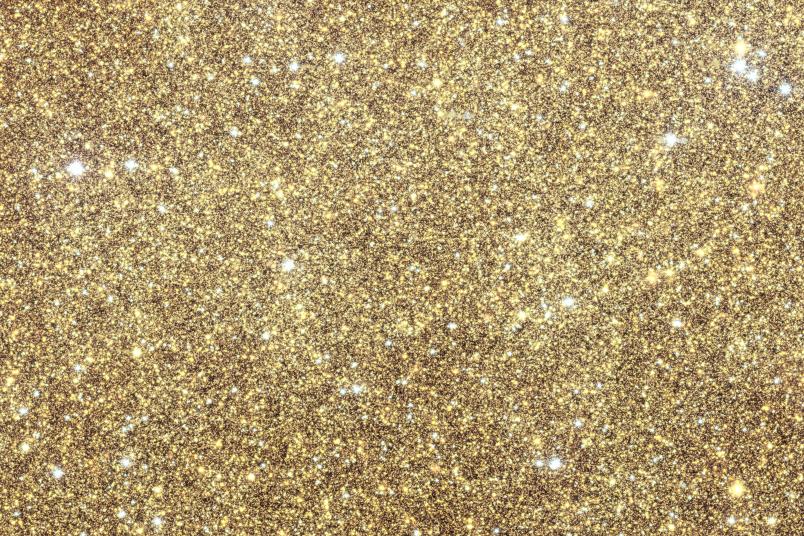
Countless stars: This image shows an area of the observations of the galactic bulge, made by the Euclid space telescope. The galactic bulge – the central region our galaxy – is a vast, tightly packed structure filled mainly with old, cooler stars, giving it its characteristic yellow colour.
Space telescope Euclid
New Image of the Milky Way’s Crowded Heart
New spectacular images from the Euclid mission: The space telescope has captured the largest and most detailed photo ever made of our Milky Way galaxy’s center.
The Euclid space telescope has captured more than 60 million stars in one image. In March 2025, it observed the densely packed center of our Milky Way for 26 hours. In June 2026, the European Space Agency ESA has released the image. It’s supposed to help astronomers find planets outside our solar system.
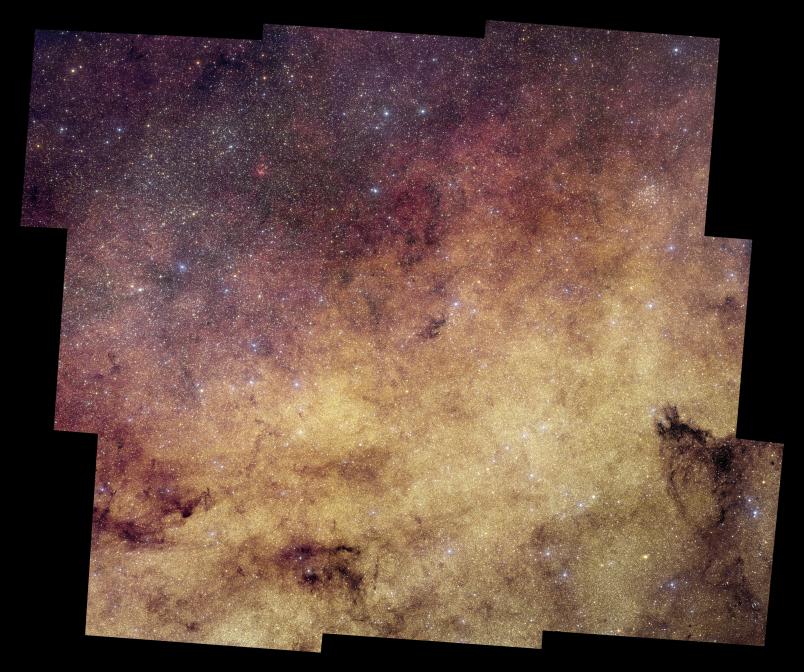
This six-gigapixel view of the galactic bulge is the largest high-resolution photo ever made of our Milky Way galaxy’s centre in visible light. It was taken on 23 March 2025 by the European Space Agency’s Euclid space telescope. This version shows the full survey area, which is a mosaic of 3x3 images. The image has been rotated counterclockwise compared to the celestial projection: north is to the left and east is down.
Usually, Euclid’s gaze is not turned towards the center of the Milky Way, but deep into the Dark Universe. The Euclid mission has been designed to reveal the hidden influence of Dark Matter and Dark Energy on the visible Universe. Professor Hendrik Hildebrandt from Ruhr University Bochum is part of the international consortium.

The sharpness and detail of the Euclid images are amazing.
“The sharpness and detail of the Euclid images are amazing. Cosmologists like me tend to avoid the center of our Milky Way because it’s too crowded to achieve results with our methods. But these images beautifully show what’s possible in other areas of astronomy with such a brilliantly designed and functioning space telescope,” he says.
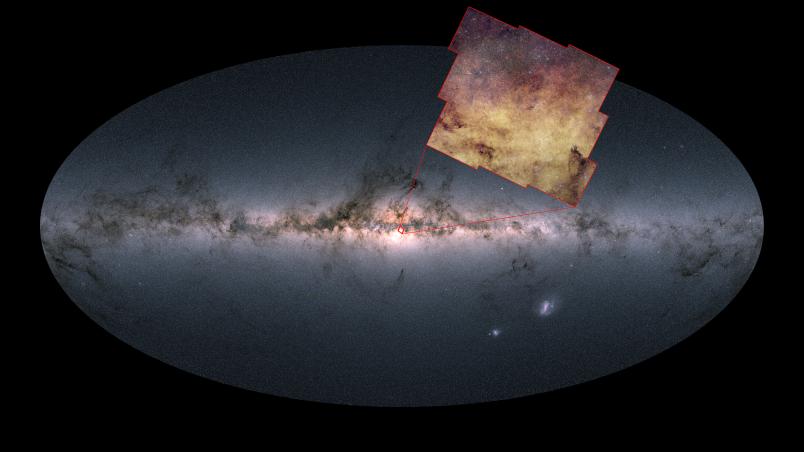
The location of Euclid’s new image of the galactic bulge is visible on the satellite Gaia’s map of the entire sky.
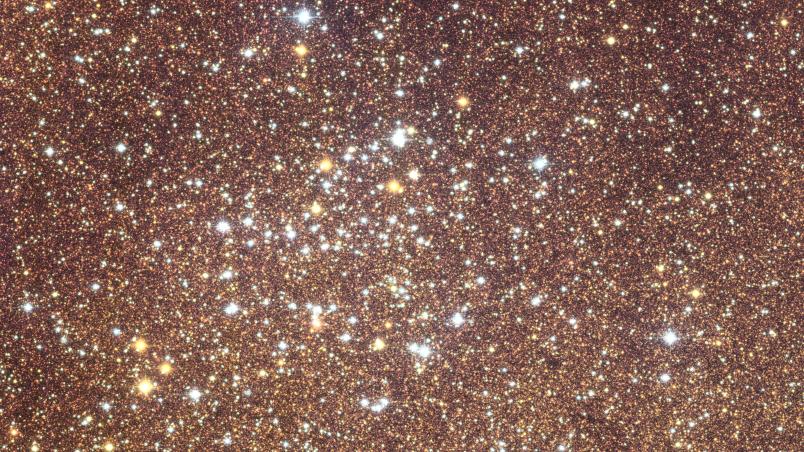
This image shows an area of the observations of the galactic bulge, made by the European Space Agency’s Euclid space telescope. Here the open star cluster NGC 6451 is visible, 8,700 light-years away from us. The area is zoomed in ten times compared to the full image.
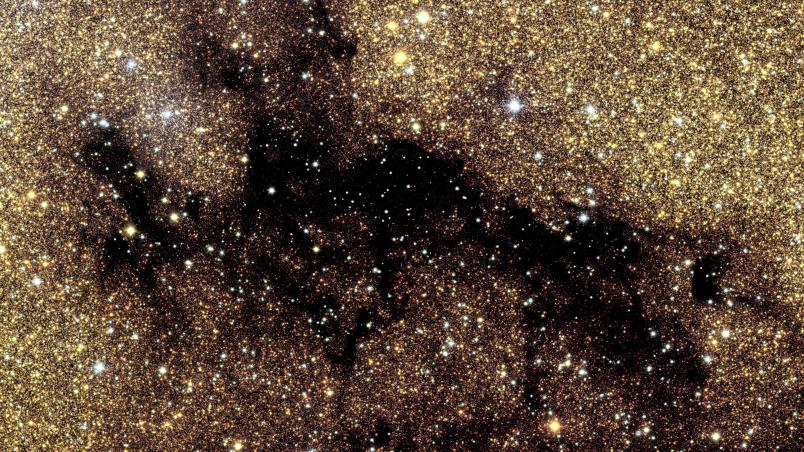
This image shows another area of the observations zoomed in ten times compared to the full image. [IN2.1]A dense molecular cloud in the foreground, called LDN 10, obscures the light from the galactic bulge (yellow).
Euclid was launched in July 2023 and started its routine science observations on 14 February 2024. Over a period of six years, Euclid will observe the shapes, distances and motions of billions of galaxies out to 10 billion light-years. 2,000 scientists from 300 institutes are involved. 2027 will be a particularly interesting year for the Bochum Team: “Next year, we expect the first cosmological results from the Euclid mission, for which we are in lead”, Hendrik Hildebrandt predicts.