
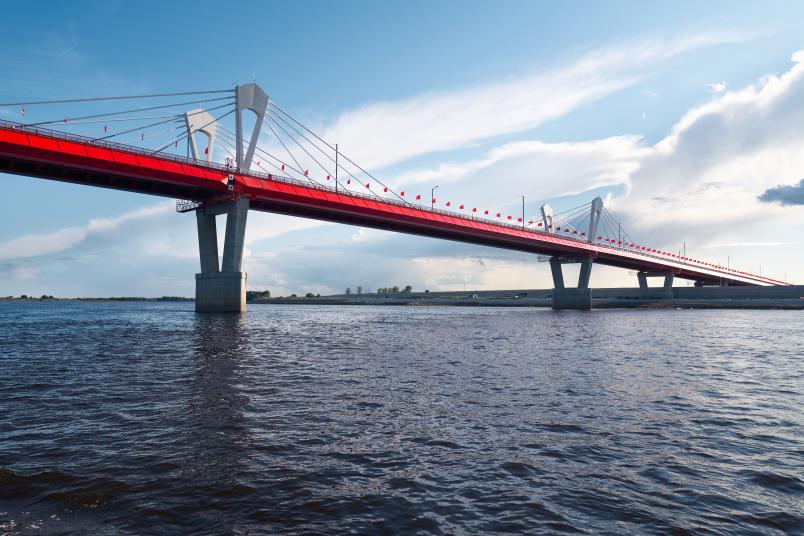
Symbol of connection: For a long time, Russia prevented the construction of bridges across the Amur River. Since 2022, there has been, among other things, a bridge for road traffic between Russia and China.
History
“The Border with the Starkest Contrasts”
The Amur River makes up half of the Chinese-Russian border. It is only in the last few years that two bridges have led across it. These do not play a major role in getting from A to B, but they are still significant.
If we look at a map of the world, our eyes are quickly drawn to a few countries that cannot be overlooked simply for their sheer size. Russia is by far the largest, and China also sticks out as the world’s fourth largest. These huge countries are separated by a border over 4,000 kilometers in length, half of which is made up of the Amur River. It is almost unbelievable that there was not one single bridge over the Amur between Russia and China until 2022. To compare: The Danube flows as a border river for only about 1,000 kilometers and yet, according to the Austrian waterways society “viadonau,” boasts 12 bridges linking the neighboring countries along its course.
However, a new spirit has been stirring on the Amur for several years, and two bridges now connect the neighboring states. Professor Sören Urbansky, historian and Eastern Europe expert at Ruhr University Bochum, is interested in how Russia and China have drawn closer and pulled apart for centuries, to now find themselves coming together once more. His interest in the region dates back to his time in the civil service.
Civil service with Russian human rights organization
“I did my civil service at the human rights organization Memorial in Moscow from 2000 to 2001,” Urbansky explains. “I worked in outpatient elder care and, among others, tended to exiled Russians who had been born in China. This sparked my interest in the two countries.”

It was a convergence of two entirely different societies.
The researcher spent a great deal of time in Russia and China, learned both languages, and crossed the border between the states. These memories remain vivid. “There was just a fence out in the steppe,” he describes. “People whom we would perceive as European lived on one side, and on the other were people we would see as Asian. Potatoes were eaten on one side, rice on the other. It was a convergence of two entirely different societies. For me, the line between China and Russia is the border with the starkest contrasts in the world.”
How the border between China and Russia was established
The historian is interested in how this border has developed over the centuries politically, economically, and in the minds of the people. He spent years researching in archives to explore the history of Chinese-Russian relations in this region. “The contrasts on both sides were not always quite so striking as they were during my travels,” he says.

Sören Urbansky heads the Chair of Eastern European History at Ruhr University Bochum.
China and Russia have maintained relations for 400 years. The first contact was made in the early 17th century when Siberian Cossacks made their way to Beijing with reconnaissance caravans. The two empires formed a pact in 1689 in which they defined the course of the border. “De facto, this did not mean much,” says Urbansky. “The border was defined but it was barely monitored.” When someone crossed the border, the few sentries stationed there by the other country rarely noticed.
From duty-free zone to border control
The border only began to be truly monitored in the late 19th century when a railway line was constructed, and the customs border shifted to the national border. “From a fiscal perspective, the Russian Far East did not even belong to Russia previously,” explains Urbansky. “It was initially a duty-free zone because it was simply impossible to control this inhospitable region.”
Geopolitical conflicts of the 20th century led to the first firm border between Russia and China. From the rivalry stemmed militarization.
The end of the nomadic peoples
“Up until 100 years ago, many Indigenous peoples who saw themselves as neither Russian nor Chinese lived in the border region. They grazed their livestock in Russia in the summer and in China during the winter,” Urbansky explains. “These nomadic lifeways were destroyed by the conflicts of the 20th century.”
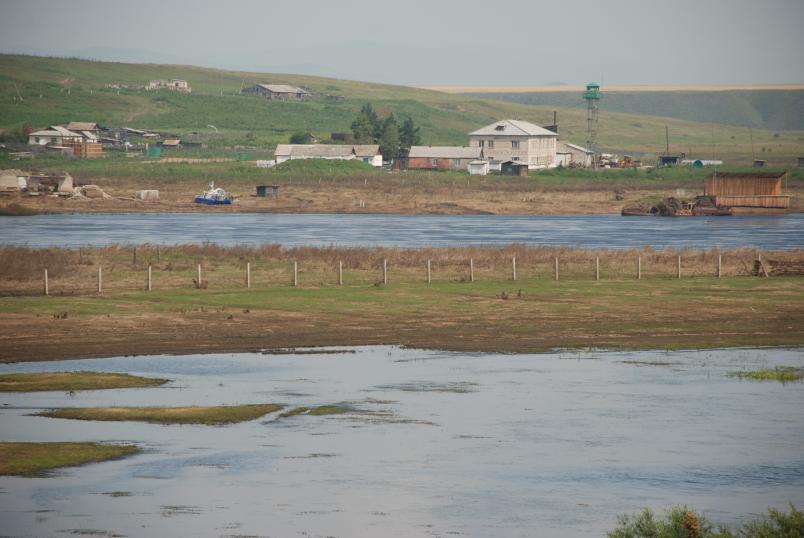
View from the Chinese bank of the Argun River facing the Russian side. The Argun is a tributary of the Amur. These images show the sparsely populated border region with small villages on both sides.
Japan occupied northeastern China in the early 1930s, turning the Chinese-Soviet border into a Japanese-Soviet one. The Soviet Union feared an attack by Japan just as much as they did an attack by Nazi Germany. It militarized to a massive degree and began to monitor the border much more heavily. In doing so, it specifically targeted the structures put in place by the peoples of the border region, confiscated nomads’ livestock, and drove out the long-time residents.
With the end of the Second World War and the founding of the People’s Republic of China, the Japanese-Soviet border was once more Chinese-Soviet. Relations between the two states were good at first, even though the border controls were still in place.
Massive resettlement campaigns
Things soured in the late 1950s, and a new, initially ideological conflict flared up between the two governments. The Soviet Union settled many thousands of people from other parts of the country in the border area, and China followed suit. “The people living on either side of the border had no memories whatsoever of what it was like when the border was open,” says Urbansky. “They had no point of reference for the people on the other side, so it was much easier to cast them as the enemy.”
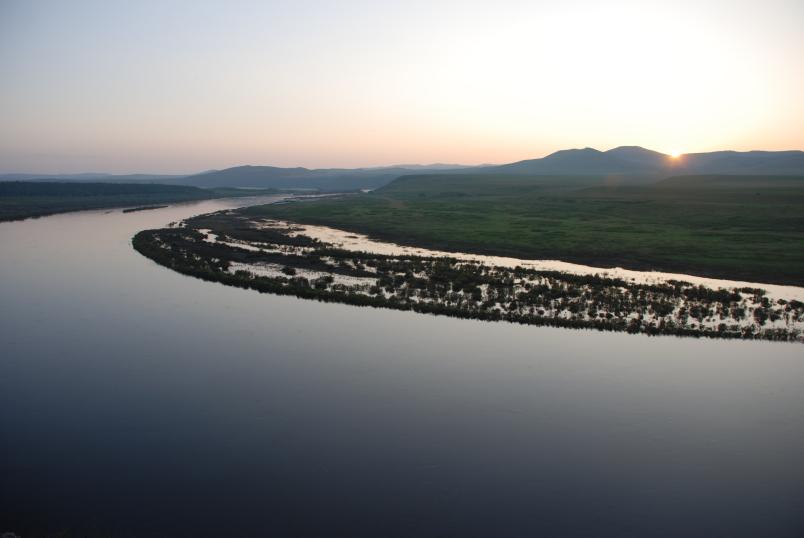
The Amur flows across over 2,000 kilometers of the border between Russia and China.
A border, the historian explains, must be enforced not only militarily, economically, and through political regulations, but also in the hearts and minds of the people.
Stoked mistrust
Although relations between China and Russia have recently thawed, the mistrust rooted in past conflicts is still great, says Urbansky “At times, it is even being stoked,” Urbansky says, providing an example: The Russian Far East was originally Chinese until Russia annexed it in the mid-19th century. “The narratives for how this transpired are quite different between Russia and China.” While Russia describes the annexation in its museums and history books as the peaceful integration of an empty region, China portrays the cession as the result of “unequal treaties,” an act of Russian imperialism, and also documents the massacre of thousands of Chinese citizens during the Boxer Rebellion in 1900.
It’s essentially a real-world analogue of an algorithm, like when countries block certain content on social media.
A museum near the border in China commemorates the annexation and the violence experienced by those living in the border region. Russians are not allowed inside. “The topic is taboo in Russia,” explains Urbansky. “And because China does not want to jeopardize its relations with Russia, it prohibits Russians from entering the museum so that they do not learn anything negative about their own history while in China. It’s essentially a real-world analogue of an algorithm, like when countries block certain content on social media.”
Tourism and language promotion
However, there are signs of rapprochement between the countries in other areas. Both countries massively promote the respective neighbor’s language in schools throughout the border region, and tourism is growing. “Still, the border societies have not met their potential.” According to Urbansky, there are hardly any Chinese-Russian marriages, and few joint schools or kindergartens.
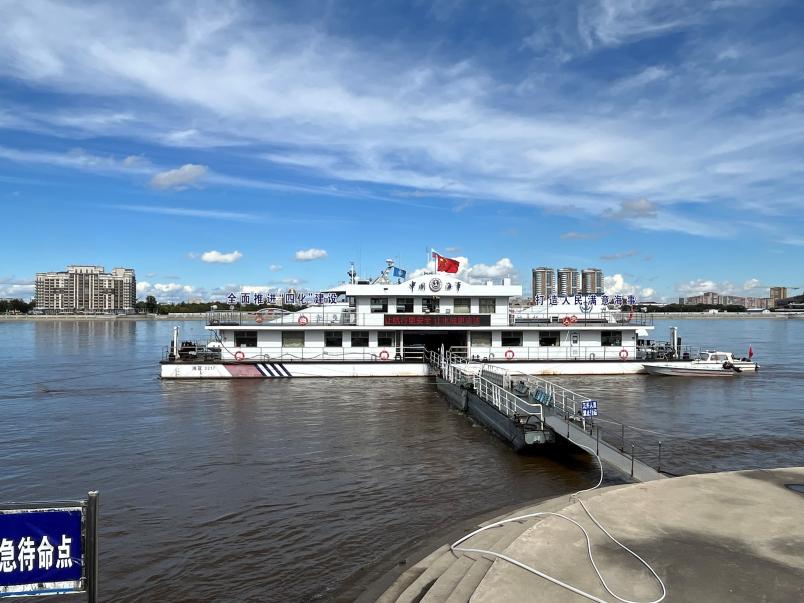
“Bridges are not everything,” says Sören Urbansky. Just because there was no bridge connecting Russia and China for a long time does not mean that the Amur River was impassable. Ferries and hovercrafts have been and are still in use to transport people from one bank of the river to the other.
“Currently, Russian interest in China is greater than the other way around,” says Urbansky. Russia’s diplomatic offensive slowly picked up speed in the 2010s. Since the Russian annexation of Crimea in 2014, and especially since the war of aggression in Ukraine starting in 2022, the Russian state is making massive efforts to forge closer ties with China to compensate for the loss of relations with the West. “This is reflected in the promotion of the Chinese language, as well as a certain degree of Chinese kitsch. For example, in Moscow you see posters for Chinese New Year or some aphorisms by Xi Jinping.” Russia is also investing in educational exchange with its neighbor; there are similar programs on the Chinese side. Nevertheless, these efforts are resonating more in Russia than in China.
Russia’s course of rapprochement can also be seen at the Amur. For many years, the country halted Chinese initiatives to build a bridge across the river on the border. Now, since 2022, there is a railway bridge as well as a bridge for car traffic. These are one thing above all: A symbol that the countries are coming closer together.
Publications on the topic
Publications on the topic