
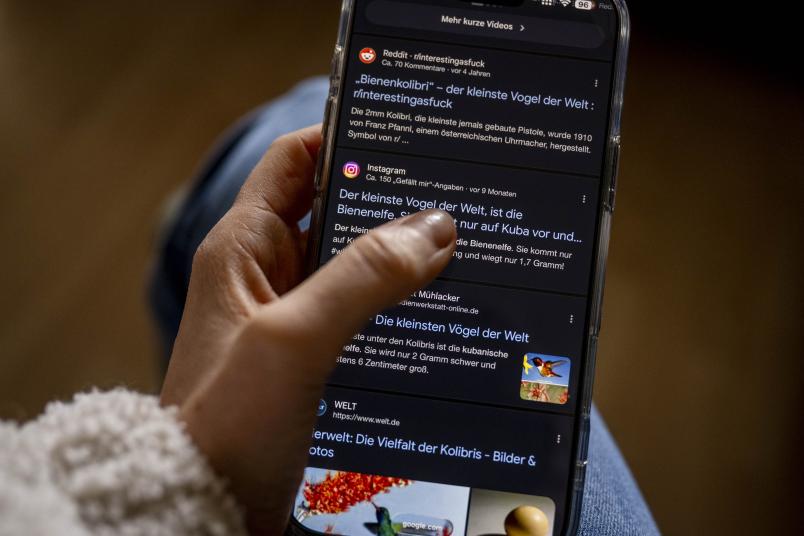
Once clicked, it's half believed – when we choose information ourselves, we are particularly inclined to believe it to be true.
Psychology
Why We Believe What We Click
Information that we select for ourselves, such as things we click online, has a stronger impact than passively acquired information on our perception of truth and falsehood.
The more often we see information, the more likely we are to believe it is truthful. This has been known for 50 years. Researchers in Bochum have now demonstrated that this “truth effect” becomes stronger when we select the information ourselves: All it takes is clicking a headline to give its contents more credence later. This effect greatly impacts the perceived reliability of true and false information in digital media. The team working around Dr. Moritz Ingendahl – from the Social Cognition Lab at the Ruhr University Bochum Faculty of Psychology – reports its findings in the Journal of Experimental Psychology: General from January 8, 2026.
Eight experiments with nearly 1000 participants
The researchers conducted a series of eight online experiments with nearly 1000 participants. The subjects were initially presented with information, such as, “The bee hummingbird is the smallest bird in the world.” This information was either presented randomly or in relation to a theme selected by the participants. The subjects then judged the truthfulness of both reiterated and new information.
“We were able to see, in accordance with past studies, that the subjects gave more credence to reiterated information than to new information,” says Ingendahl. “We could also demonstrate that reiteration has a bigger impact when the subjects selected the information themselves instead of when it was presented randomly.”
Following, clicking, sharing
This is particularly significant in digital contexts: For example, faith in reiterated information makes people more likely to share such information on social media, thereby contributing to its propagation. We also decide who we follow, thereby already choosing the information that we receive. Online media also largely function such that information is only roughly presented and has to be clicked on for all of it to be displayed.
The researchers believe that the reasons why self-selected information is more influential lie in how the brain processes it. “Actively searching for information entails more alertness and cognitive resources,” explains Ingendahl. “The test subjects were able to better remember actively selected information later on than information they had acquired passively.”
The team in Bochum also believes this effect could make fake news more successful. On the other hand, fact-checking information could also benefit if presented appropriately.