
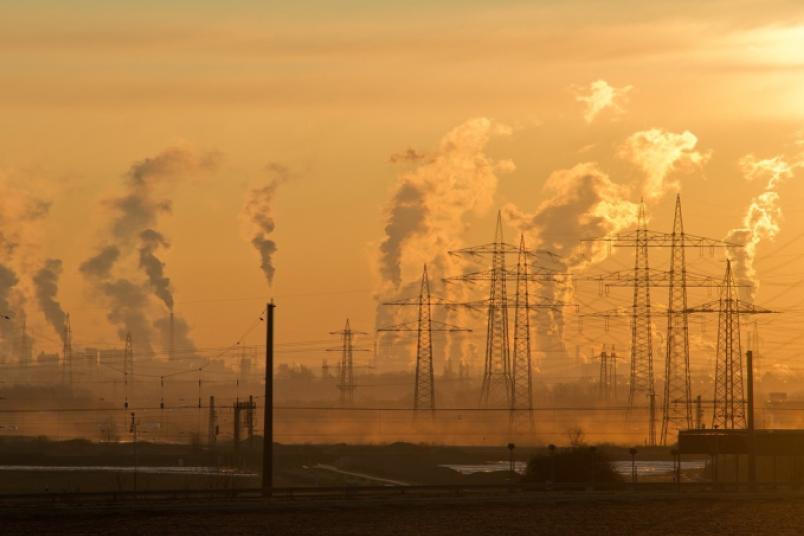
The need to reduce carbon dioxide emissions is urgent.
Biotechnology
Transforming waste into valuable materials
Instead of fossil raw materials, researchers want to upgrade waste materials to curb CO2 emissions.
Our current living standards rapidly consume energy and resources while burdening the climate with immense levels of CO2. One solution could be to recover carbon dioxide from waste streams, as this would allow it to be used in circulation. An international team working in biotechnology with Professor Dirk Tischler from Ruhr University Bochum, Germany, aims to devise methods for achieving this. They report in a perspective article in the August 1, 2025 issue of the journal Nature Communications.
A circular bioeconomy
“We aim to switch our economy from oil-based processes towards a sustainable, circular bioeconomy,” explains Tischler. The researchers view the biotechnological conversion of C1 components like methanol, methane, formic acid, or carbon dioxide into products of the value chain as a potential route towards this goal.
One example of such a process is the production of methanol from CO2 or renewable biomass. “In combination with a climate-friendly energy supply, this would be a sustainable C1 source that could be used to form biomass or biosynthesize valuable resources through natural or modified methylotrophic organisms,” says Tischler. Another option would be designing artificial metabolic pathways on the drawing board. Thanks to synthetic biology, numerous enzymatic solutions have been devised for fixing CO2 and converting it into valuable components like pyruvate for further biotechnological processes.
Hurdles and synergies
“This makes it possible to utilize bio-based raw material flows or exhaust gases,” says Tischler. However, not all ideas and concepts are already at the stage where they can be utilized or even technically realized. C1-based processes in particular are still too costly and thus not economical. In the current article, the researchers shed light on the remaining obstacles and the potential synergies between various concepts to promote ideas that make it possible to establish C1-based value chains, address ecological issues, minimize greenhouse emissions, and use resources more efficiently.
Funding
Original publication
Press contact