
Study
Immune cells communicate via neurotransmitters
New understanding of how the immune system is regulated
Researchers at the University of Münster and Ruhr University Bochum, Germany, have demonstrated for the first time in real time that the body’s own defence cells use catecholamines – neurotransmitters such as dopamine and adrenaline – to communicate via the same chemical signals as nerve cells. This discovery opens up a new understanding of how the immune system is regulated. The study has been published in the latest issue of the journal “Advanced Science”.
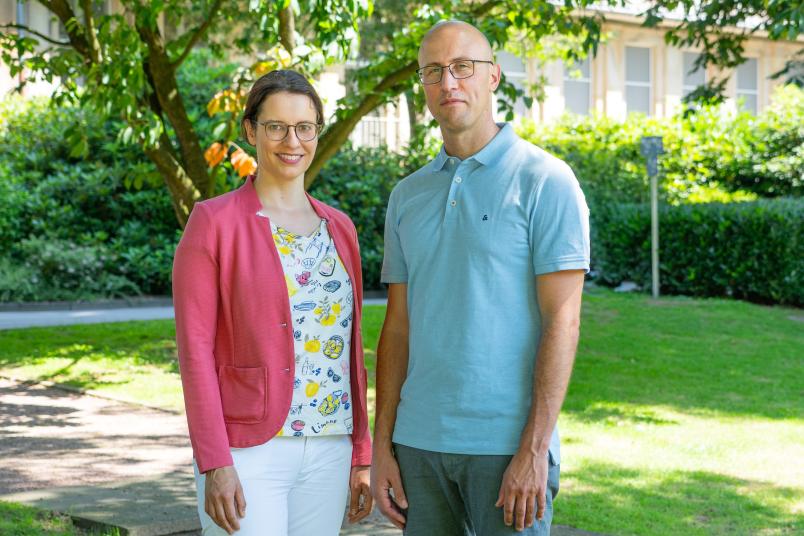
Neutrophils are the most common type of white blood cell in humans and form the first ‘line of defence’ against infections. The research team led by Professor Luise Erpenbeck from Münster and Professor Sebastian Kruss from Bochum has demonstrated that these immune cells possess the same molecular machinery as nerve cells: They take up catecholamines, store them in vesicles – that is, in small, membrane-bound vesicles – and release them in a targeted manner in response to inflammatory stimuli – much like neurons. “We were surprised to see how similar neutrophils and neurons are in their ability to handle neurotransmitters,” explains Luise Erpenbeck.
Real-time observation was made possible by fluorescent carbon nanotube sensors (SWCNTs): these are tiny detectors that react sensitively to catecholamines and, for the first time, allowed their release from individual living cells to be tracked ‘live’ under a microscope. Inflammatory signals, including serotonin and bacterial components, proved to be the triggers. “Until now, we simply lacked the methods to visualise such processes directly in living immune cells,” says Sebastian Kruss. “What we have now observed using the nanosensors fundamentally changes our understanding of these cells.”
The released catecholamines have a direct effect on the immune response. They curb an excessive defensive reaction by the neutrophils whilst simultaneously promoting blood clotting – a direct link between the immune and vascular systems. Measurements of gene activity in healthy volunteers in whom inflammation was experimentally induced confirm that, not only under in vitro conditions but also within the human body, neutrophils coordinate the adaptation of their catecholamine receptors and their synthesis and degradation programmes during an inflammatory response. “This is a sign that this mechanism plays a significant role in the human inflammatory response,” Luise Erpenbeck and Sebastian Kruss agree. “The fact that neutrophils communicate via neurotransmitters therefore also changes our understanding of the processes involved in inflammation.”